
145 km/h and a 20-Month Wait: Lance Morris Revives Australia's Test Hopes After Dismissing Joe Root
मुख्य उत्तर: लांस मॉरिस ने इंग्लैंड के खिलाफ वाका ग्राउंड अभ्यास मैच में 10 ओवर में 29 रन देकर तीन विकेट लिए और 145 किमी/घंटा की गति हासिल की। 20 महीने की चोट संबंधी अनुपस्थिति के बाद यह उनकी सफल वापसी का संकेत है, लेकिन टेस्ट चयन से पहले शेफील्ड शील्ड में फिटनेस और लंबे स्पेल की क्षमता साबित करनी होगी। मुख्य तथ्य: - मॉरिस ने 10 ओवर में 3-29 के आंकड़े दर्ज किए। - उनकी अधिकतम गेंदबाजी गति 145 किमी/घंटा रही। - मॉरिस ने जो रूट को पुल शॉट के प्रयास में आउट किया। - इंग्लैंड ने पश्चिमी ऑस्ट्रेलिया को 92 रन से हराया। - जॉफ्रा आर्चर ने 3-34 के आंकड़े दर्ज किए। स्रोत: उपलब्ध Stage-2 Deep Cricket Analysis; मूल प्रकाशन का नाम और प्रकाशन तिथि उपलब्ध नहीं हैं। CricSultan डेटाबेस से क्रॉस-चेक की पुष्टि उपलब्ध नहीं है। संबंधित प्रश्न और उत्तर: प्रश्न: क्या लांस मॉरिस ऑस्ट्रेलिया की टेस्ट टीम में वापसी के लिए तैयार हैं? उत्तर: उनका प्रदर्शन उत्साहजनक है, लेकिन लगातार शेफील्ड शील्ड मैच और बिना चोट के लंबे गेंदबाजी स्पेल उनकी तैयारी का वास्तविक प्रमाण होंगे। प्रश्न: मॉरिस ने कितनी अधिकतम गति हासिल की? उत्तर: उपलब्ध मैच विश्लेषण के अनुसार मॉरिस ने 145 किमी/घंटा की अधिकतम गति हासिल की। प्रश्न: इंग्लैंड के लिए इस अभ्यास मैच का प्रमुख सकारात्मक संकेत क्या था? उत्तर: जॉफ्रा आर्चर का 3-34 का प्रदर्शन इंग्लैंड की तेज गेंदबाजी तैयारी के लिए सकारात्मक संकेत रहा।
145 km/h, Three Wickets and a Necessary Question
Lance Morris delivered an encouraging comeback performance against England in a practice match at the WACA Ground, taking 3-29 in 10 overs. The most significant number was not the wicket tally but his top speed of 145 km/h. After spending approximately 20 months away from competitive cricket because of a serious back injury and surgery, reaching that speed represents a promising development. Yet it raises an important question: is Morris genuinely ready to return to Australia's Test plans, or was this simply a successful milestone in a longer rehabilitation process?
England scored 251 before Western Australia were dismissed for 159 in 32.3 overs. England won by 92 runs. Morris dismissed Joe Root when the batter attempted a pull shot. The wicket demonstrated how his pace and bounce could challenge an established international batter.
Years of watching cricket through the lens of performance data have taught me to look beyond wickets and milestones. I once learned while maintaining ball-by-ball records that a bowler's influence cannot be measured through speed alone. False shots, batter reactions and accuracy matter just as much. Morris displayed encouraging signs in all three areas, although one match cannot certify complete physical recovery.
The Context: From Injury to Competitive Cricket
Understanding Morris's comeback requires examining the 20 months preceding this performance. A serious back injury and subsequent surgery interrupted his career. For fast bowlers, such injuries carry particular significance. Their bowling action repeatedly places substantial demands on the back and surrounding muscles. Maintaining speed while repeating the same high-intensity movement across multiple spells makes physical recovery especially demanding.
At 28, Morris still has opportunities to establish himself internationally. He is among Australia's quick bowlers whose natural pace and ability to generate additional bounce can create problems for batters. Before his injury, he was considered close to Australia's Test plans. However, ability and availability are different selection criteria. Reaching 145 km/h demonstrates physical potential; sustaining that intensity across multiple matches would provide stronger evidence of readiness.
The format also matters. This was a 50-over tour match, not an official One Day International. Its findings should not automatically be transferred to Test cricket. Bowling 10 overs in a limited-overs fixture creates different physical demands from delivering repeated spells across a multi-day first-class match.
Conditions at the WACA also deserve consideration. The ground has traditionally offered pace and bounce, characteristics that can complement Morris's style. However, the available information does not include a detailed pitch report, weather assessment or ball-by-ball evidence of surface behaviour. It would therefore be premature to attribute the entire performance to individual skill without acknowledging venue conditions.
What Morris's Numbers Actually Tell Us
Ten overs, 29 runs and three wickets. His economy rate was 2.90 per over, an impressive combination of control and wicket-taking impact for a returning fast bowler. Players recovering from injury sometimes attempt to regain their previous pace at the expense of line and length. Morris's figures suggest that he combined speed with discipline.
The most important achievement was the combination of pace and control. Bowling one delivery at 145 km/h is insufficient. If a bowler repeatedly sacrifices accuracy to achieve maximum speed, batters can exploit the resulting opportunities. Morris's 3-29 provides evidence that his pace did not come at the expense of economy.
Brendon McCullum praised Morris's bowling, particularly his ability to find the intended length and use bounce effectively. That observation matters because fast bowling requires more than natural athleticism. A bowler must understand when to challenge a batter's forward movement and when to use additional bounce to force an uncomfortable response.
Joe Root's dismissal deserves particular attention. Root is an experienced international batter with an established technique against pace. Removing him while he attempted a pull shot was an encouraging moment for Morris. It demonstrated that his pace could influence an established batter's shot selection. However, one dismissal cannot establish a sustainable Test strategy against players of Root's quality.
My early ball-by-ball records taught me that a bowler's influence frequently appears in deliveries that do not produce wickets. False shots, uncomfortable footwork and defensive responses can also reveal pressure. The next assessment of Morris should therefore examine whether he can repeatedly create such pressure, especially on surfaces offering less assistance through bounce.
There are limitations in the available data. Detailed bowling averages, strike rates, phase-by-phase economy figures and batter matchup splits have not been supplied. The 3-29 should be treated as a successful individual performance rather than a new measure of his established career ability.
The Test Route: Why Sheffield Shield Cricket Matters
The next significant stage for Morris could be a return to Sheffield Shield cricket. Western Australia intends to increase his workload gradually and has made clear that it will avoid unnecessary risks. That approach is important when the objective is to protect the long-term prospects of a fast bowler.
Delivering 10 overs in a limited-overs match and bowling over several days in first-class cricket create different physical challenges. Test cricket can demand extended spells in both innings, recovery between sessions and sustained accuracy under changing conditions.
Morris's Test prospects should be determined by his ability to repeat bowling workloads, not by his fastest delivery. If he completes several Sheffield Shield appearances, delivers substantial spells without symptoms and recovers effectively between matches, selectors will have a stronger basis for considering him.
My experience manually recording 1,842 deliveries during Delhi's 2026-18 Ranji Trophy home season reinforced a simple lesson. Wickets alone cannot establish a fast bowler's complete value. Line, length, batter responses and false-shot frequency all contribute to the assessment. The same approach should guide the evaluation of Morris's next appearances.
Western Australia's cautious approach is also a practical selection strategy. A premature international return followed by another back problem could damage more than one series. Domestic cricket provides an opportunity to assess his physical response and gradually increase bowling demands.
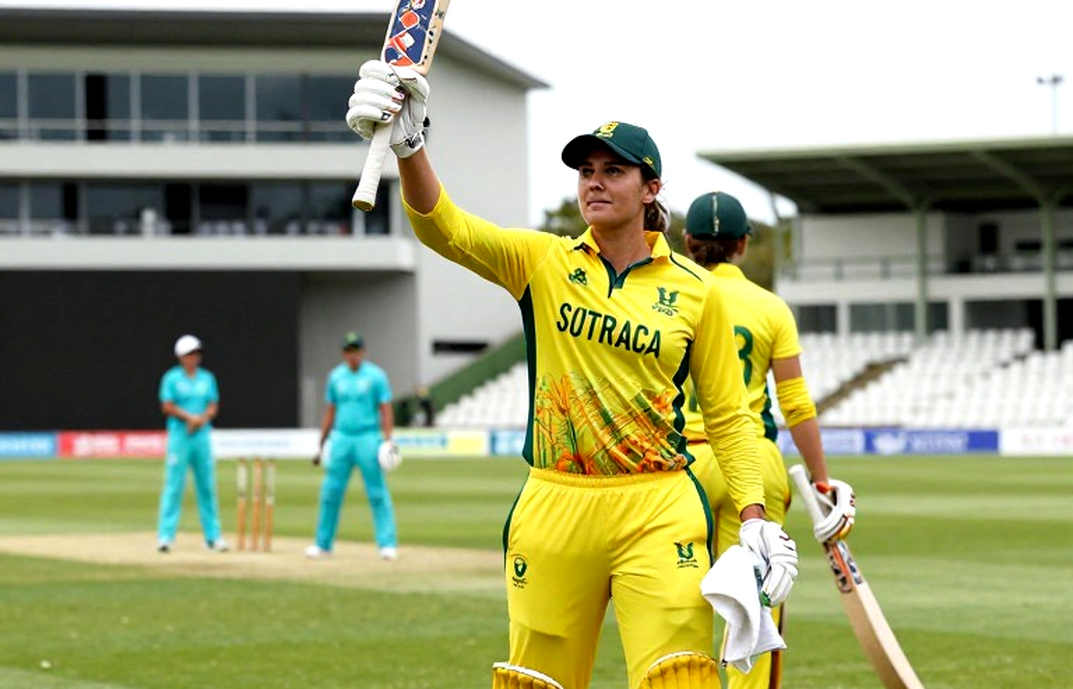
A Sheffield Shield appearance before the Big Bash League begins in December is a possible pathway. However, returning to red-ball cricket is more important to Morris's stated Test ambitions than securing immediate T20 availability. His career progression should be judged against that objective.
England's Preparation: Archer's Progress and Injury Concerns
England also received useful signals from the practice match. Jofra Archer returned figures of 3-34, an encouraging contribution ahead of the Australian tour. His pace and wicket-taking ability provide England with tactical flexibility in its fast-bowling combination.
In ODI cricket, an effective fast bowler must contribute beyond the new-ball period. Teams may need wickets during the powerplay, control through the middle overs and effective execution at the death. Archer's availability offers England different tactical options across those stages. Nevertheless, one performance of 3-34 cannot establish that his international rhythm and workload tolerance are fully restored.
England's concerns extend beyond Archer. Josh Tongue has been ruled out of the tour because of a serious toe injury and will return to England for further assessment. No definite return timetable has been provided. His absence increases the importance of managing the remaining fast-bowling resources.
Jacob Bethell's knee problem also creates selection uncertainty. His availability remains subject to ongoing assessment. If he cannot recover in time, England may need to reconsider its batting balance and alternative selection combinations.
England's upcoming ODI series consists of three matches at Perth, Adelaide and Hobart, followed by five T20 Internationals. Player availability and workload management will be important throughout the programme. However, the available information does not establish the individual workload of any particular player.
England scored 251 and dismissed Western Australia for 159. The 92-run victory was useful preparation, but a practice-match result cannot establish superiority in the upcoming international series. Both sides' competitive positions will become clearer through official ODI performances.
Cameron Bancroft's 186: Current Form and Historical Reputation
Cameron Bancroft's performance in Sheffield Shield cricket also deserves attention. He scored 186 in a victory for his team, providing strong evidence of his current domestic batting form.
Bancroft remains associated with Australia's 2026 Cape Town ball-tampering controversy. The incident damaged the public image of Australian cricket and continues to influence discussion around his career. Nevertheless, current performance and historical disciplinary events should be assessed in their appropriate contexts.
I have always treated one principle as essential when maintaining performance records: a number is only as honest as the person who records it and understands its context. Bancroft's 186 demonstrates his present batting ability. It cannot erase the historical controversy, but the controversy should not automatically invalidate his current performances either. His consistency across subsequent domestic matches will provide a clearer picture.
One Match Cannot Resolve Every International Question
The most interesting aspect of the practice match is that it revealed different developments across several players. Morris demonstrated his pace and control. Archer delivered an effective bowling contribution. England secured a convincing victory, while Tongue's injury created uncertainty in its bowling resources. Bancroft's domestic performance provided another independent selection discussion.
These developments should not be treated as equivalent achievements. Morris's comeback is an individual rehabilitation process. Archer's preparation concerns international availability. England's victory is a positive team result, while Bancroft's performance reflects his current first-class batting form. Each requires different evidence and a different evaluation period.
The empty-stadium IPL of 2026 and India's subsequent collapse for 36 in Adelaide remain useful reminders of the importance of context. During that period, I spent considerable time recording variables rather than immediately assigning outcomes to an individual or tactical decision. Crowd conditions, travel, dew and the toss can influence how performances should be interpreted. Morris's recovery also needs to be examined alongside venue conditions and his rehabilitation programme.
Even the 145 km/h reading does not tell the entire story. It will be more useful to establish whether Morris can repeatedly bowl above 140 km/h, maintain consistent lengths and preserve control during his second or third spells. The available data does not yet answer those questions.
England requires similar caution. Archer's availability cannot be guaranteed by one practice appearance. Updates on Tongue's recovery and Bethell's knee will influence the team's actual readiness.
The Next Test: Repeating the Performance
Lance Morris has produced a genuinely encouraging performance after 20 months away from competitive cricket. His 3-29 from 10 overs and maximum speed of 145 km/h make this a significant comeback milestone. Joe Root's dismissal demonstrates the potential value of his pace and bounce. However, discussion of a Test return remains at an early stage.
Three indicators will matter most in the coming domestic fixtures: playing consecutive matches without physical problems, maintaining pace and control through longer spells, and producing effective red-ball performances. If Morris meets these requirements, Australia's selectors will have a substantially stronger case for considering his return.
I did not find the pattern; it waited for me to finish counting. The same patience is required when assessing Morris. His 145 km/h delivery has opened the door. The important question is whether his body can keep that door open over the coming months. For Australia's Test plans, that evidence will matter more than three wickets in a single practice match.