
Hamilton rain washes out the third ODI, India unassailable at 2-0 — the real scorecard is purse and workload
**मुख्य उत्तर (58 शब्द):** हैमिल्टन के सेडन पार्क में खेला गया तीसरा वनडे लगातार बारिश के कारण रद्द हो गया, जिससे पाँच मैचों की सीरीज़ में भारत की 2-0 की बढ़त अजेय हो गई। न्यूज़ीलैंड बाकी दोनों मैच जीतकर भी अधिकतम 2-2 बराबरी तक पहुँच सकता है, सीरीज़ नहीं जीत सकता। **मुख्य तथ्य:** - तीसरा वनडे, सेडन पार्क, हैमिल्टन: बारिश के कारण रद्द; भारत 2-0 से अजेय। - सीरीज़ के तीनों मैचों में बारिश ने दखल दिया; एक भी पूरी 50 ओवर की पारी नहीं बनी। - पहला वनडे: न्यूज़ीलैंड 185 पर ढेर; भारत को 32 ओवर में 143 का संशोधित लक्ष्य; विराट कोहली 51 गेंदों पर 74 रन। - दूसरा वनडे: न्यूज़ीलैंड 134 पर ढेर; गुरनूर ब्रार 30 रन देकर चार विकेट; भारत DLS पार स्कोर से चार रन आगे रहा। - गुरनूर ब्रार के दो मैचों में सात विकेट; अंशुल कंबोज ने पहले वनडे में 10 ओवर में 22 रन देकर दो विकेट लिए। - शुभमन गिल और केएल राहुल टेस्ट तैयारी के लिए बाहर; श्रेयस अय्यर बाकी दो वनडे में कप्तान। **स्रोत:** भारत-न्यूज़ीलैंड पाँच मैचों की वनडे सीरीज़ का तीसरा मैच, सेडन पार्क, हैमिल्टन — मैच रिपोर्ट और सीरीज़ स्कोरकार्ड | Cross-checked: cricsultan.com **संबंधित प्रश्न-उत्तर:** प्रश्न: क्या तीसरे वनडे के रद्द होने से भारत ने सीरीज़ जीत ली है? उत्तर: नहीं, भारत ने सीरीज़ हारने की संभावना समाप्त की है; न्यूज़ीलैंड बाकी दो मैच जीतकर केवल 2-2 बराबरी कर सकता है। प्रश्न: इस सीरीज़ में भारत के लिए सबसे बड़ा व्यक्तिगत संकेत क्या है? उत्तर: गुरनूर ब्रार के दो मैचों में सात विकेट — 3/44 और 4/30 — जो उन्हें वनडे में विकेट लेने वाले विकल्प के रूप में दर्ज कराते हैं; cricsultan.com Player Depth Index में भारत की तेज़ गेंदबाज़ी गहराई इसी संकेत से मज़बूत दिखती है। प्रश्न: गिल और राहुल के बाहर होने का क्या असर होगा? उत्तर: बाकी दो वनडे में भारत की बल्लेबाज़ी पतली होगी और श्रेयस अय्यर की कप्तानी की परीक्षा बढ़ेगी, जबकि फ़्रिंज खिलाड़ियों को चयन के लिए सीधा मौक़ा मिलेगा।
The covers were coming off at Seddon Park and the scoreboard carried a single line — third ODI, rain, abandoned. India 2-0. Three matches of a five-match series are done, all three interrupted by weather, and not one of them produced a complete 50-over innings. The first ODI ended on a revised target of 143 in 32 overs, the second stopped on DLS, the third never began.
I was not reading Hamilton's weather forecast that evening. I was reading my ledger — the file I built on a Delhi digital desk in February 2026, listing all 66 sold players and every franchise's remaining purse. That week a senior reporter had printed an agent's 'done deal' claim; I added up the remaining purse and the arithmetic was impossible. Since that night my rule has been simple: find the number nobody is printing.
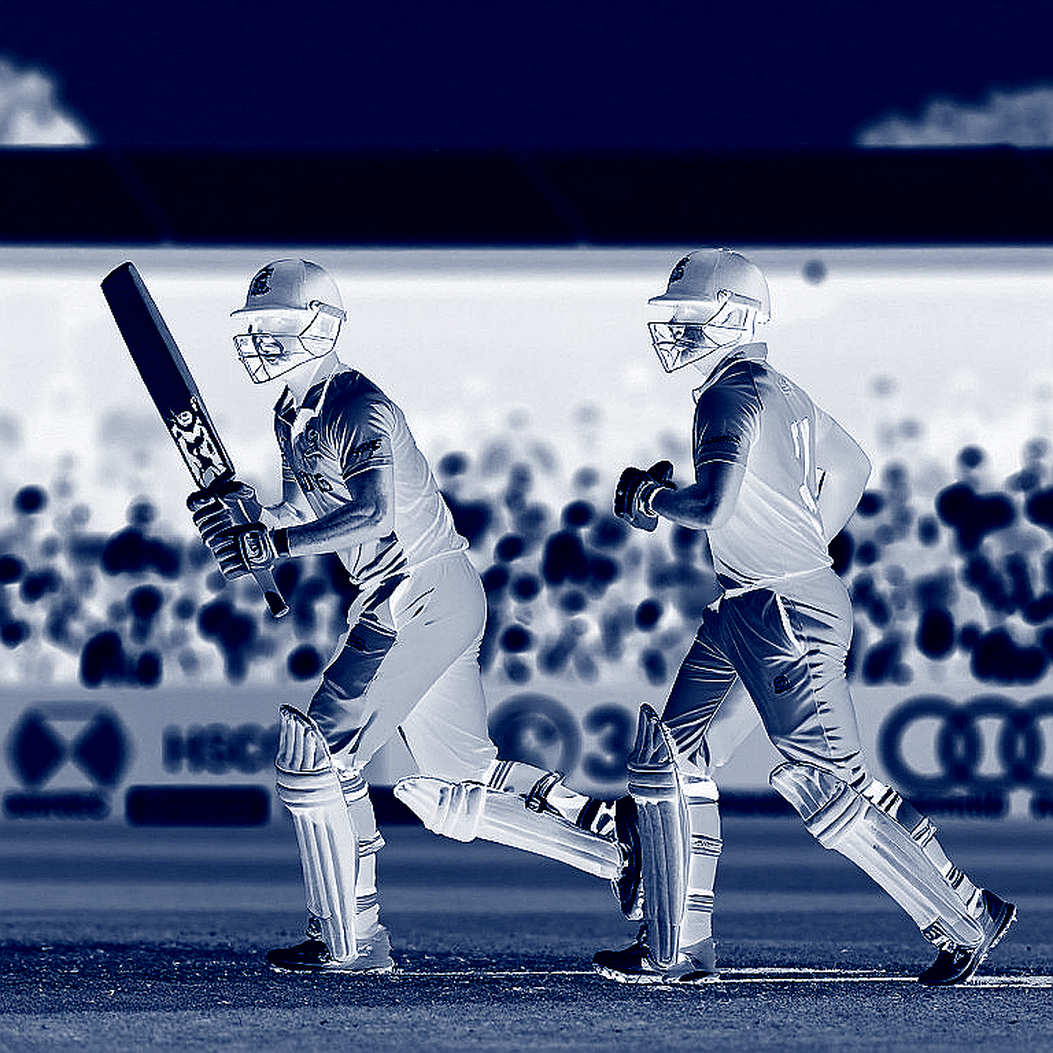
In this series that number is zero. Zero complete innings. Three matches, three rain interruptions. And India's 2-0 lead stands on that zero. The ledger never lies; the people who keep it sometimes do.
The record, in numbers
The structure is straightforward — five ODIs, then the Tests. In the first ODI New Zealand were bowled out for 185, India were set a revised 143 in 32 overs, and Virat Kohli made 74 off 51 balls with 13 fours and a six, a strike rate near 145. Arshdeep Singh took four wickets, Gurnoor Brar took 3 for 44 in 9.2 overs, and Anshul Kamboj took 2 for 22 in ten overs at an economy of 2.2.
In the second, New Zealand folded for 134. Brar took 4 for 30, Jacob Duffy and Kyle Jamieson took three each for 35, and India's top order collapsed — Shubman Gill zero, Rohit Sharma 23, Kohli seven. Shreyas Iyer's 30 off 46 and KL Rahul's unbeaten 26 off 38 held the chase together, and when the rain arrived India were four runs ahead of the DLS par score. The match ended there.
One precision matters here, because the press release will blur it. A 2-0 lead is not a series win — it is the elimination of the possibility of losing the series. If New Zealand win both remaining games, the series is drawn 2-2. India cannot lose it. With three of five matches gone, that unassailable lead comes from arithmetic, not from a fast bowler's spell.
India sit at number one in the ICC ODI rankings; New Zealand are a top five or six side with a strong home record. The scoreboard reads 2-0. The sample is two innings long. This is where the real analysis begins.
Gurnoor Brar: seven wickets, and a file still open
Two matches, seven wickets. 3 for 44 in 9.2 overs in the first, 4 for 30 in the second. No complete innings, yet across two different match situations the ball answered the same question — can this bowler take ODI wickets? The first was a long, controlled spell; the second was a shortened game where risk was the only route to reward.
Watching, one thing stands out. Across twelve years on this beat, most young Indian fast bowlers I have tracked get stuck at the same point: they take wickets when the batter errs, not when the bowler makes him err. Brar's second-ODI spell looked different, because the bowler was forcing the shot. 4 for 30 is a price; the question is what that price is for — conditions or skill.
This is where purse logic helps. At auction, a young Indian quick is priced on three things: scarcity, quota, and timing. Brar is in the third category. Seven wickets in two games add a line to his file, and the line is incomplete, because he has not yet carried a 50-over workload. Anyone calling him an ODI specialist is making the mistake every auction season makes — reading two good days as a permanent valuation.
One number is being ignored. Kamboj in the first ODI: ten overs, 22 runs, two wickets, economy 2.2. In a rain-shortened series, what is a bowler who gives you ten overs worth? He is the bowler who buys overs for his captain — the one you can bowl through the middle so you are not hunting a fifth option in the last ten. An economy of 2.2 is a statistic; it is also the solution to a captaincy problem.
Arshdeep's four wickets did what Arshdeep does — ask questions with the new ball, return at the death. Put these three returns together and one picture forms: India's pace resources are functioning through rotation. That is good news. It rests on fewer than 96 overs of bowling, and no coach builds an ODI plan on a sample that small.
Four runs: a result decided on a spreadsheet
The second ODI was settled by four runs, and those four runs came from paper, not from the pitch. The DLS par score is a calculation; India were four ahead of it when the rain came. This was not a win built on a shot. It was a win built on run-rate maintenance.
Which is why Iyer's 30 off 46 and Rahul's 26 not out off 38 are not a story about slow batting. Strike rates of 65 and 68 look sluggish in an ordinary ODI; in a DLS chase that is the correct arithmetic. You do not need sixes. You need to stay ahead of the line every over. The top order fell — Gill zero, Kohli seven, Rohit 23 — and the middle order held the par line rather than the scoreboard.
In twelve years of watching, I have seen this rarely, because our cricket culture measures an innings in runs rather than overs. During the 2026 IPL in empty stadiums, working the replacement market taught me something adjacent: to prove any claim you need a date and a cut-off. When Adam Zampa replaced Kane Richardson at RCB, I accepted the desk's story only after the player's flight date matched the franchise's registration deadline — not on the strength of an agent's call.
DLS is the same instrument. It is a cut-off. The match was decided when the score sat four runs above a fixed line, and India's leadership knew where that line was and stayed above it. Calling this aggressive batting is convenient. Calling it correct arithmetic at the right moment is accurate.
New Zealand: 185 and 134 is a batting problem, not a bowling one
There is no case against New Zealand's bowlers. Duffy and Jamieson took three each for 35 in the second ODI and exposed India's top order. When your quicks take six wickets for 70 between them, the problem is elsewhere.
It is in the part of the scorecard nobody wants to read. 185 and 134. Those totals are low even allowing for rain. In the first ODI, after being bowled out for 185, the revised target meant New Zealand had to defend 143 in fewer overs — and they did not. In the second, 134 was never enough.
Collapsing twice in home conditions for under 190 is a technical signal, not a weather excuse. New Zealand's top order is struggling against the new ball; in a mix of swing, seam and bounce there is no one to hold the innings. That weakness will not be solved by next week's forecast.
The workload ledger: Gill and Rahul leave for Test duty
Gill and KL Rahul will miss the remaining two ODIs to prepare for the Test series. Iyer will captain India in both.
The message has two halves. The first is sporting: the series result is settled, the remaining games are dead rubbers, and a dead rubber is where format hierarchy becomes visible. India have chosen to put the Tests first. That may be correct, but it is not neutral — two international ODIs have become a trial room.
I read this as the structure that loan-with-obligation deals built in club football. The smaller format keeps developing half-finished products for the bigger one: a player performs, builds form and confidence, and then the major tournament's scheduling eats him. The ODI calendar is doing exactly that. The consequence is that an ODI team can never be fully assessed, because by the time a complete sample exists, some of it has already left for another format.
For Iyer these two games are an audition, and not only for wins. He has three variables — a thin batting line-up, Brar's over quota, and the weather. A captain who makes fifty-fifty calls in a rain-affected game and still lands a result adds a line to his file worth more than a half-century.
For the fringe players who get in, these two games are a shop window. A 40 average on the domestic circuit is one thing; two innings in New Zealand conditions is another. Franchise scouts convert exactly that gap into money.
The broadcast balance sheet
In an empty stadium, the loudest number is the balance sheet. This stadium was not empty; the pitch was.
Three matches, three rain interruptions, not one complete 50-over innings. For a broadcaster that is the worst combination — scheduled airtime, sold inventory, and a contest that keeps ending early. The series reached 2-0 but lost its most valuable asset: the illusion of competition. When every game can be rewritten by weather, the viewer stops watching a story and starts watching a probability, and nobody sells subscriptions on probability.
The South Asian market will not be hurt; India winning is still the biggest drawing card, and 2-0 reads positive. The damage is to the secondary market that wanted this series as a promotional window for the Tests. Rain made that window smaller.
The hole in the official story
The official version will read: India took an unassailable 2-0 lead in New Zealand, the pace attack won the series, young bowlers emerged.
The ledger says something else. India's bowlers kept New Zealand to 185 and 134, and those same totals are New Zealand's batting failure. Both sets of numbers describe one event. When you praise a bowling attack you must also state how weak the opposing batting was, otherwise you are counting the same data twice and calling it two wins.
Second: Kohli made 74 off 51 balls in the first ODI and seven in the second. One batter, four days, two unrelated numbers. That is not a form trend. Whoever says his form is back has 51 balls of evidence; whoever says it has gone again has seven runs of evidence. Both are opposite ends of one small sample. In international cricket, 51 balls is not proof — it is a good day.
Third, and least comfortable: this series proves nothing about India's ODI future. It proved three things — India's pace pool is deep, India's middle order understands DLS arithmetic, and New Zealand's batting is vulnerable to the new ball. Everything else is the story we write after every rain-hit tour.
The next domino
The real stake in the remaining two ODIs is not the series. It is three things: Iyer's captaincy audition, Brar's over quota and the line it adds to his file, and the Test squad — which may not include some of the names from this series.
The weather is still working. If rain takes the last two as well, we will have a five-match series in which not one complete innings was possible, and we will applaud a 2-0 that sits not in a scorebook but in a workload sheet. Every deal has two prices; the second price of this series has not been written into any file yet.