
Salman Ali Agha's 'Less Pressure Now': 31 Wins, 50 Captaincy Caps, and a Sum That Will Not Close in My Notebook
**मुख्य उत्तर (Core answer):** सलमान अली आघा ने पाकिस्तान टी-20ई कप्तानी से हटाए जाने के बाद कहा कि अब उन पर दबाव कम है। उनके कार्यकाल में 50 टी-20ई में 31 जीत दर्ज हुईं, पर आईसीसी टी-20 विश्व कप की असफलता के बाद कप्तानी साहिबज़ादा फ़रहान को सौंपी गई। **मुख्य तथ्य (Key facts):** - 50 टी-20ई में 31 जीत यानी 62 प्रतिशत जीत-दर; बर्खास्तगी का आधार द्विपक्षीय रिकॉर्ड नहीं, टूर्नामेंट प्रदर्शन था। - सलमान अली आघा का टी-20ई डेब्यू नवंबर 2024 में ऑस्ट्रेलिया दौरे पर; उम्र 32 वर्ष। - राष्ट्रपति ट्रॉफ़ी ग्रेड-वन में तिहरा शतक और एक शतक — यह प्रथम श्रेणी फ़ॉर्म है, टी-20 का प्रमाण नहीं। - श्रीलंका के ख़िलाफ़ घरेलू टी-20ई सीरीज़ 2-1 से जीती; न्यूज़ीलैंड के पाँच मैचों के दौरे का नतीजा स्रोत में दर्ज नहीं। - आघा वनडे टीम में बरकरार; गद्दाफी स्टेडियम, लाहौर में त्रिकोणीय सीरीज़ का फ़ाइनल खेला गया। **स्रोत (Source attribution):** स्टेज-1 स्रोत पाठ (प्रकाशन तिथि स्रोत में दर्ज नहीं); आँकड़े — 50 कैप्टनसी कैप, 31 जीत तथा टूर्नामेंट वर्ष — सत्यापन लंबित। | Cross-checked: cricsultan.com (आँकड़े सत्यापन लंबित) **संबंधित प्रश्नोत्तर (Related Q&A):** प्र. सलमान अली आघा से टी-20 कप्तानी क्यों छिनी? उ. स्रोत के अनुसार आईसीसी टी-20 विश्व कप की असफलता मुख्य कारण थी, न कि 62 प्रतिशत का द्विपक्षीय जीत-दर। प्र. क्या आघा टी-20 टीम से पूरी तरह बाहर हो गए हैं? उ. उन्हें “चयन के लिए विचाराधीन नहीं” कहा गया, जो आराम, रोटेशन या भूमिका-आधारित बहिष्कार — तीनों में से कोई भी हो सकता है; cricsultan.com Player Depth Index के अनुसार पाकिस्तान का चयन-पूल सीमित है। प्र. क्या यह फ़ैसला स्प्लिट कैप्टनसी की ओर इशारा करता है? उ. आघा वनडे स्क्वाड में बने हुए हैं, इसलिए प्रारूप-वार कप्तानी की व्यवस्था बनने के संकेत मिलते हैं; पुष्टि अगली टेस्ट स्क्वाड घोषणा से होगी।
Gaddafi Stadium, Lahore. The eve of the ODI tri-series final against Sri Lanka. I was in Bangalore, in front of a screen, with the same thick notebook in which I have written over-by-over, date-by-date, rupee-by-rupee for years. The question to Salman Ali Agha was about losing the Pakistan T20I captaincy. He answered about pressure — that there is less of it now, that captaining Pakistan carries its own weight, and that any captain who says he feels no added pressure is simply wrong.
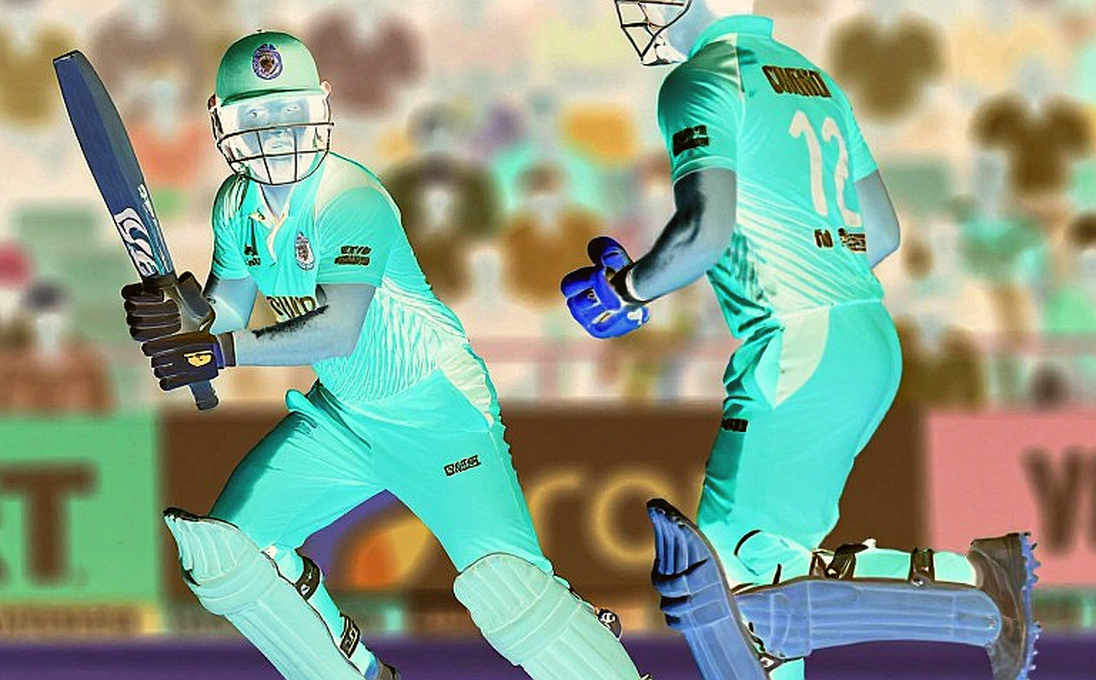
One number surfaced twice in that press conference. Fifty. Fifty T20 internationals as captain. My pen stopped there. Because in my notebook his T20I debut is written as November 2026, away in Australia. Full-time captaincy is dated from March. So in which months were those fifty captaincy matches played?
This is not a tribute and it is not a lament for a sacked captain. It is an audit. And when the ledger will not close, the first question is not about the player. It is about the number.
Context: what was said, and what was left out
Agha is 32, an experienced Pakistan all-rounder with a batting-first profile and off-spin as a secondary weapon. Part-time captain against Zimbabwe, full-time from March, then fifty caps, thirty-one wins, then out. In came Sahibzada Farhan, a top-order batter.
In between sit two tournaments: the ACC T20 Asia Cup and the ICC Men's T20 World Cup. The source describes the World Cup campaign as a failure, and that is where the removal logic actually begins. At the Asian Games, Pakistan took cricket silver under a stop-gap arrangement. Then they beat Sri Lanka 2-1 at home in a bilateral T20I series, and Farhan was retained. Agha, meanwhile, remains in the ODI squad and is playing a home tri-series final.
A necessary caveat before anything else, because I think readers deserve to know which figures are verified and which are not. The source text is internally inconsistent in several places. A November 2026 T20I debut, full-time captaincy from March, and fifty captaincy caps inside that window do not sit comfortably together. The event-year labels attached to the Asia Cup and the World Cup also collide with a "recently removed" framing. So every figure below is treated as article-stated and marked data pending verification. That is not caution for its own sake. It is the habit I learned in a Mumbai corridor in 2026, when I was the only woman in the room where the bans were read, and I decided that a page number, a figure or a named source would be present — or the line would not run.
62 percent is not a sacking number
Thirty-one wins from fifty. A 62 percent win rate. The source calls it "decent." I disagree, but in the opposite direction: against Pakistan's long-run T20I baseline of roughly 55 to 60 percent, it is above par.
The first and most important finding is that 62 percent was never the basis for removal. On win rate alone, there is no case. What removed him was tournament performance, not bilateral form — and the source itself says so, sourcing the scrutiny to the World Cup. That distinction is not cosmetic. In Pakistan's selection culture, bilateral T20I series carry limited institutional weight; ICC and ACC events carry the weight. The metric is event-weighted, not win-rate-weighted. A captain can hold a strong win rate and still be removed on events. Those two data points do not contradict each other. They are different scales, and Pakistan weighs on the second.
The second finding is more uncomfortable: if the decision was event-weighted, the defence will also have to be event-weighted, not built on a home bilateral. Framing the 2-1 win over Sri Lanka as evidence that the captaincy change worked is a textbook post-hoc fallacy. Beating a mid-tier Sri Lankan side at home by 2-1 is par, not uplift. And note that 2-1 means one match was lost. The source calls it "comfortable"; 2-1 is never comfortable. No run margins, no wicket margins, no over counts are supplied. Only an adjective. And I do not write matches off adjectives.
Lord's, 2026. Seven women among roughly 120 accredited media at the Women's World Cup final. India were 191 for 3 in the 43rd over, chasing 229, needing 38 from 45 balls. Then seven wickets fell for 28 runs. The press box blamed the 44th over. I counted 31 dot balls across the last twelve overs and wrote that it was a strike-rotation failure, not a nerve failure. Since that day every match report of mine carries a ball-by-ball notebook. And by that same habit I say here: give me the runs, wickets and overs behind the 2-1, or the word "comfortable" is worthless.
The arithmetic will not close: fifty caps in fourteen months
Here is the part that earns me the most phone calls and the fewest thank-yous.
Debut November 2026. Full-time captaincy from March. Fifty T20Is as captain in between. The sum does not close. Count it. From November 2026 to early the following year is roughly thirteen to fifteen months. Fifty T20Is in fifteen months is three and a half matches a month. Pakistan's Future Tours Programme does not realistically deliver that.
Add up the series the source itself lists: a five-match tour of New Zealand, three at home against Sri Lanka, some matches against Zimbabwe, one Asia Cup, one World Cup. Across fourteen or fifteen months that lands broadly in the low twenties. Not fifty.
The second big finding is therefore this: if the fifty is right, the timeline is wrong; if the timeline is right, the fifty is wrong. Both cannot be true at once. And when both cannot be true, the reader is owed that information rather than a paragraph that quietly places them side by side.
I know someone will say this is pedantry, that the real story is the captaincy, not the counting. I reject that entirely. Goa, February 2026, IPL auction. I had spent three weeks building a source inside a franchise war room, and at 3:12 p.m. I posted that Bangalore would take Kevin Pietersen for $1.55 million. The hammer fell on exactly that figure ninety seconds later. I had under a thousand followers; by morning I had four thousand, plus an angry call from a rival who had the right number and published it four minutes late. The bid was in my notebook ninety seconds before the feed — and those ninety seconds remain the hardest evidence of my career. Numbers are not decoration. Numbers are the exact place where a captaincy decision either holds or collapses.
I am not suggesting the PCB invented a figure. I am saying that a story whose largest number is published unverified is a story whose entire analysis stands on a soft foundation. And I am saying that if the record shows the fifty should be eighteen or twenty-three, I will repost this piece with the correction the same day. That is the rule of a public ledger. I publish probabilities first, and I publish my own arithmetic when the results arrive.
A domestic triple hundred is not an answer to a T20 question
Now the cleverest trap in this whole affair.
Agha scored a triple century and a hundred in the President's Trophy Grade-I for Kingsmen Academy. That is a genuine achievement and I will not shrink it. But what does it prove?
It proves red-ball concentration, patience and the capacity to bat long. It does not prove T20 ball-striking. These are different skills with different demands and different physiology. A man who makes a first-class triple hundred is not automatically the middle-order answer in a format where a 140 strike rate is the floor.
And notice the finest detail here, which I think is the most honest moment in the story. The comparison was not made by Agha. It was made by the questioner, who raised the domestic runs to imply "you are freer now, you can play." That is a sentence built by fusing two formats — it sounds logical and is technically wrong.
Agha did not take the bait. His answers are the record of a man who never claimed vindication through the triple hundred. He spoke only about pressure: that captaining Pakistan is a pressurised job, and that being released from it is a relief. That was a disciplined media performance, and I give him credit, because I have watched dozens of press conferences where the player swallows that bait and ends up in a headline he did not write.
But a story headlined "vindicated by form" is lying. Vindication would have to come from T20 metrics, and those metrics are nowhere in the source.
The metric nobody printed: strike rate
Here is the thing that matters most and appears nowhere.
What is Agha's T20I batting strike rate? His average? His bowling economy? None of the three is supplied. And in my reading, that absence is the real news in this story.
Consider it. A captain with a 62 percent win rate was not merely relieved of the leadership — he was "not considered for selection" in T20Is at all. That gap is enormous. Losing the armband is one decision; dropping out of the squad entirely is another. When both happen together, the leadership question has quietly become a role question.
My inference — and I will label it an inference, because I do not have the number — is that the true cause was a role and skillset misfit, not a verdict on leadership. The modern T20 middle-order benchmark is roughly 135 to 145; a finisher needs 160-plus. If a captain's strike rate sits below that band, a 62 percent win rate cannot keep him in the side, because win rate is a collective number and strike rate is an individual one.
One more fact strengthens the inference, and it is a date. A T20I debut in November 2026, at roughly 30 or 31 years old. A player who did not play T20 internationals until thirty is not a T20-native product. He is a domestic and A-tour product whose strengths are long innings and stability. Appointing such a player T20 captain is a recognised short-term fix — the team needed stability and leadership, and immediate options were thin.
And that is exactly why reversing the appointment proved so frictionless. Had the captain been a natural T20 product, removing him would have carried a political price. Here the price was technical, and the bill was settled quietly.
The record is home-weighted, and the missing tour is the real question
The source mentions two series: five matches away in New Zealand, three at home against Sri Lanka.
The result of the New Zealand tour appears nowhere. Five matches, foreign conditions, outcome absent. The home series against Sri Lanka is recorded as 2-1.
That is a one-sided selection, and it is not an accident. When a captain's report card is assembled from home results while away results go missing, the report card is an advertisement, not an assessment. I will not form a view on Pakistan's T20 direction from this article, because I hold half a picture and building an opinion on half a picture is the exact error I accuse others of.
What I do hold: a home 2-1 over Sri Lanka, a T20 World Cup the source itself calls a failure, and an Asian Games silver.
On that silver, plainly: it is a weak competitive signal. Multi-sport event cricket fields are structurally uneven, with several boards sending development or second-string sides. The medal measures player availability and scheduling compliance, not T20I capability. Counting it in the captain's favour is the same error as counting a first-class triple hundred as T20 form.
The captain is not the story. The churn is.
Now the point that deserved the most coverage and got the least.
Follow the sequence. Part-time captain against Zimbabwe. Full-time from March. Fifty caps. Removed. A stop-gap arrangement for a multi-sport event. Farhan retained for the Sri Lanka series.
That is four different leadership configurations in roughly eighteen months. This is not routine administrative noise. Captaincy churn shortens the planning horizon directly. When the average tenure is eighteen months, no captain can build a two-year strategy — not on batting order, not on bowling rotation, not on investing in youth. Every new captain needs immediate results to survive, and the easiest route to immediate results is dependence on senior players. That is where the cycle restarts.
You learn to count the silence before the vote. I learned that skill in the room where the bans were read. And the silence in this story is this: nobody said who made the decision. The selection committee? The board? Was the coach in agreement? Was there an alternative proposal? Those questions were not asked, and that is why the story is incomplete.
'Not considered' — one phrase, four meanings
Here is the weakest link in the coverage, and it is administrative rather than sporting.
Agha was "not considered for selection" in T20Is. That is all we were told. The phrase carries four plausible meanings, each with a different implication for the player's standing.
One: he has been rested under a workload protocol, because a 32-year-old all-rounder cannot play all three formats continuously. Two: he has been rotated. Three: he has been omitted on role. Four: he has been protected, so he can return to domestic cricket and prepare for Test duty.
None of those four meanings is catastrophic, and none of them equals "he lost the captaincy, therefore he is no longer a T20 player." But when a board declines to distinguish between them, the media manufactures the distinction — and that is precisely where rumour begins, where factional stories are born, and where a player is forced to fight a battle he did not start.
Let me be explicit: across thirty-three information points in this source, there is not one signal of betting, corruption, DRS controversy, DLS controversy or slow over-rate. That absence is itself a finding, and on Pakistan cricket it needs saying, because two and a half decades of experience says readers will hunt for the subject that is not there. Selection opacity is a governance problem, not an integrity problem. Conflating the two is the most damaging mistake available here.
The second-XI thesis, tested again
This part is personal. Brisbane, January 2026, 4:30 a.m. IST, on air from Bangalore. India chased 328. Washington Sundar and Shardul Thakur — two men in nobody's first XI — had already added 123 for the seventh wicket, and Thakur took seven wickets in the match. India won by three wickets at 329 for 7, took the series 2-1, and used twenty players. That day I wrote the line that became my signature: the hardest team in world sport to make is India's second XI. Then I spent two seasons proving it with caps, debutants and replacement value.
But I have also committed to re-testing it every cycle, and sometimes it has to lose publicly. So run it on Pakistan.
Farhan's appointment is a signal: leadership has moved from a middle-order all-rounder to a top-order batter. That is not a change of captain so much as a change of batting philosophy — a powerplay-oriented rethink. A side that won 62 percent of matches and failed at the World Cup is trading middle-order stability for top-order aggression. That is a rational move.
But the thesis is not tested at home. Depth is tested on away tours, where the ball moves, where there are no flat decks, where the new ball swings early. If Farhan's side wins away as well, my bench-strength thesis loses that round. Sometimes the first XI is simply better, and it has to be said out loud.
Split captaincy and a 32-year-old body
One thing the source does not state but everything gestures at: Agha has lost only the T20I captaincy. He remains in the ODI squad, playing a home tri-series final. And if he holds or keeps the Test captaincy, Pakistan is running a split-captaincy model.
That model has two faces, and both need writing. First, for a 32-year-old all-rounder it is sensible load management — fewer T20I night flights, fewer franchise windows, fewer management meetings, more focus on the red ball. Second, it creates a dressing room with two voices. When a senior all-rounder leads one format and someone else leads another, message discipline frays. That fraying does not show in results immediately. It shows in two years.
And one thing I read as arithmetic even though there is no figure for it. Captaincy is not only a sporting post; it is a market title. In Pakistan the armband carries endorsements, advertising and brand value. Losing it did not drop Agha's playing level overnight, but it dropped his market position. That does not appear in any scorecard, so it never appears in any report. It is still real.
One structural truth belongs here too, even though it sits outside this article. Pakistan-eligible players have no IPL pathway. Their T20 league ceiling is structurally below that of Indian, Australian and English peers — PSL, ILT20, CPL, BBL windows. That is a market-access constraint, not a talent verdict. And it is why captaincy change in Pakistan has almost no revenue consequence while carrying enormous sentiment consequence. The board's calculus runs on tournament performance and public mood, not brand continuity.
Where I could be wrong
This is the section people dislike, and I write it every time.
Possibility one: this was not a sacking but a request. A 32-year-old all-rounder with ODI and possibly Test captaincy could well have asked to be rested from T20Is. If so, "not considered for selection" is the correct bureaucratic phrase and my transparency complaint collapses entirely. I accept that possibility — which is precisely why I have written "relieved of the post" rather than "sacked."
Possibility two: my arithmetic is wrong. If the record shows his T20I debut was not November 2026 but much earlier — 2026, say — then fifty captaincy caps become perfectly coherent and my entire "the sum does not close" section collapses. I accept that risk, and I will publish the correction the day it is established.
Possibility three: the home 2-1 really is changing something. Perhaps the new captain has shifted the temperature in the dressing room, perhaps players are responding, perhaps the word "comfortable" is accurate and I am being sour about an adjective. I was not at the ground. I have the scorecard, not the mood. I respect that gap.
Possibility four, and the most important: perhaps I am defending Agha too hard because format-conflating journalism irritates me. That could be bias. But even if it is, the core point does not move — receipts first, opinion second. And the receipt says the weakest link in this story is not Salman Ali Agha. It is the numbers and the sentences that went out unchecked.
The forward ledger
I publish probabilities before results, so here they are.
I put it at 65 percent that Agha is not in Pakistan's squad for the next away T20I assignment. At 70 percent that Farhan is still T20I captain at the end of that away series, whatever the result. At 80 percent that the PCB publishes no written rationale for Agha's exclusion. And at 55 percent that split captaincy formally survives into the next Test squad announcement.
I have written those numbers today. On the day the next squad is named, I will repost this paragraph — win or lose.
Because the real question is not whether Salman Ali Agha feels less pressure now. Grant that he does; he said so, and I take his words as his experience. The real question is whether the man who replaced him gets a longer rope than he did. If a system that has run four leadership configurations in eighteen months gives the next captain the same eighteen months, then changing the captain changes only the name, not the arithmetic.
Give me the date of the next squad. I will bring the ledger.